Pakistani truck art, often referred to as “jingle art” is a unique and colorful form of folk art that has captured the imagination of people around the world. It is more than just a form of vehicle decoration; it’s a rich cultural expression that combines tradition and modernity in a visually stunning and highly distinctive way. This article delves into the history, significance, and evolution of Pakistani truck art, shedding light on the artists and communities that keep this tradition alive.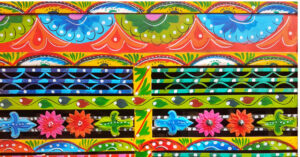

The roots of Pakistani truck art can be traced back to the 1920s and 1930s when British colonialism was at its height in the Indian subcontinent. The British introduced various forms of decorative arts to the region, which influenced local artists. This influence, combined with indigenous artistic traditions, gave birth to the unique art form that is Pakistani truck art.
Truck art serves multiple functions beyond mere decoration. It is a means of self-expression for truck owners and drivers, reflecting their personalities, values, and aspirations. The intricate motifs and vibrant colors often include religious symbols, national icons, and cultural references, thereby carrying deep symbolism.
Moreover, these artworks are believed to bring good luck and protect the vehicles from accidents. A common practice is to write inscriptions such as “Bismillah” (In the name of Allah) or “Mashallah” (God has willed it) to invoke divine protection during journeys. The art also acts as a form of storytelling, conveying messages, poetry, and social commentary to those who encounter the vehicles on the road.
Pakistani truck art employs a wide range of artistic techniques and styles. These include intricate hand-painted designs, detailed calligraphy, and the skilled use of bright and contrasting colors. Artists often employ stencil work to create consistent patterns, and every detail is meticulously painted by hand. The diversity of patterns, from floral motifs to abstract designs, showcases the creativity of the artists involved.

Additionally, mirrors, metalwork, and additional three-dimensional elements are often added to the artwork to create a truly three-dimensional effect. These embellishments catch the sunlight and create a mesmerizing, shimmering effect.
While Pakistani truck art has traditionally been male-dominated, there has been a growing trend of female artists entering this field in recent years. Women have been using their artistic talents to
challenge stereotypes and make their mark on a predominantly male industry. This has been an important step towards gender equality and empowerment in Pakistan.
Pakistani truck art has not remained confined to the borders of the country. It has gained international recognition and acclaim. Exhibitions featuring Pakistani truck art have been held in major cities around the world, showcasing the beauty, depth, and significance of this unique art form. It has inspired artists, designers, and fashion enthusiasts, leading to its incorporation into various products and art installations globally.
Pakistani truck art is more than just an eye-catching form of decoration; it’s a dynamic cultural expression that embodies the rich history and artistic heritage of Pakistan. This art form continues to evolve and adapt, reflecting changing societal norms and values. As it gains recognition on the global stage, it serves as a testament to the resilience, creativity, and cultural wealth of Pakistan. Whether found on the bustling streets of Lahore or showcased in galleries abroad, Pakistani truck art is a visual feast that bridges the gap between tradition and modernity, bringing a touch of Pakistan’s vibrant culture to the world.
By Atif Bangash
for Pakistani.irish