8th March 2022 : International Women Day : Women make their mark in fields ranging from agriculture to health and technology.
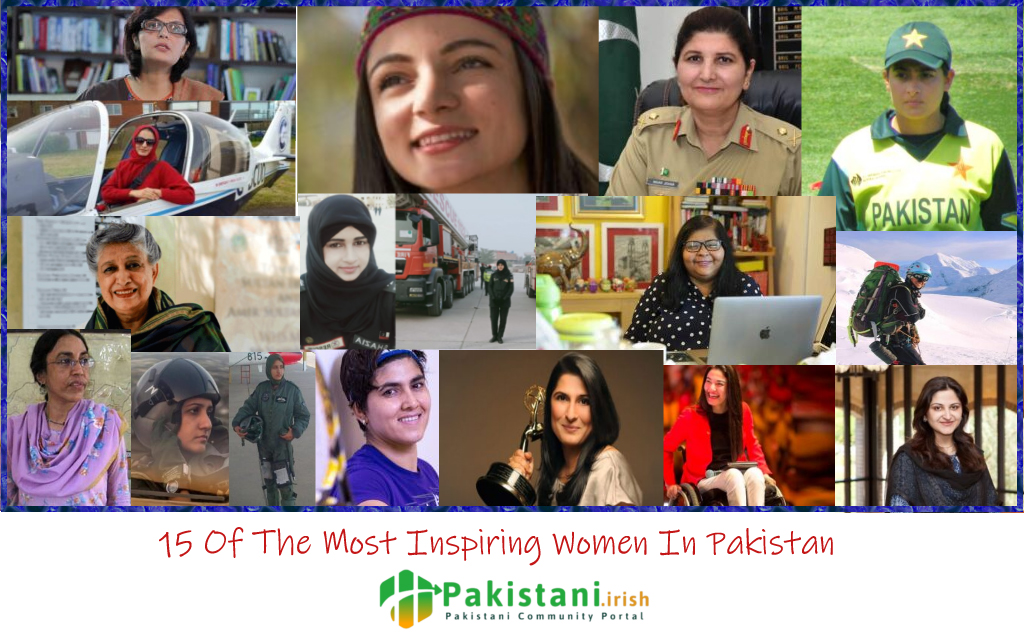
Pakistan has some of the most exemplary women leaders working in diverse sectors from agriculture to health to technology, making their mark in national and international front and contributing to Pakistan’s development. As part of International Women’s Day, we look at 10 Pakistani women who are a role model for millions and are inspiring a generation of girls all around the world.
1. Dr Sania Nishtar – health and development leader
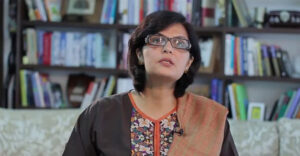
Dr Sania Nishtar, who is currently serving as Special Assistant of Prime Minister on Poverty Alleviation and Social Protection, is described as a passionate leader who “has a deep understanding of her field of work”. As a leader in global health and development, Dr Nishtar is spearheading the government’s flagship social protection programme, Ehsaas, improving the livelihoods of millions of Pakistanis and supporting women empowerment. Dr Nishtar has dedicated her efforts to reduce the widening gap between the rich and the poor, to protect the country’s most vulnerable population and to improve health systems in Pakistan. She has a PhD from King’s College London and has won several national and international accolades.
2. Karishma Ali – footballer and founder of sports school
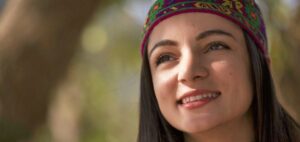
Karishma Ali who hails from the remote valley of Chitral is the first girl from her hometown to have played football at a national and international level. The 22-year-old footballer has been named among Forbes’ 30 under 30. Karishma is also the founder of the Chitral Women’s Sports Club – a training school for girls. Karishma wants to encourage other young girls in the region to take up sports and different activities just the way her father supported her. She also helped se set up a handicraft centre for women as the region is famous for Chitral embroidery and the initiative led her to take part in Milan Fashion Week where she represented Pakistan’s unique handicraft.
3. Shazia Parveen – Pakistan’s first female fire fighter
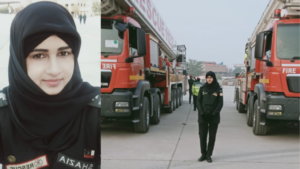
Shazia Parveen is hailed as Pakistan’s first female fire fighter. She was only 22 when she joined the rescue service in 2010 in Vehari district of Punjab province. Parveen chose the challenging job with a passion and mission to save and serve the people. After putting out fires in fields and factories, she also served as a fire instructor at the Punjab Emergency Services Academy in Lahore where surprisingly many of her students were girls. Parveen feels her profession is empowering and would inspire other Pakistani girls to opt for non-traditional careers.
4. Dr Sarah Qureshi – aerospace engineer

Dr Sarah Qureshi is a Pakistani aerospace engineer who is considered a trailblazer for women in Pakistan. She is working in a field where women make up a very tiny percentage with the biggest gaps in technical and leadership positions. Dr Qureshi is developing the world’s first contrail-free aircraft engine to reduce aviation induced global warming and make air travel environmentally safe. “At Aero Engine Craft, we are devoted to offering a solution to save the planet by reducing aviation’s climate impact due to contrails,” Dr Qureshi told Gulf News in an interview. She has a Master’s degree in Aerospace Dynamics and a PhD in Aerospace Propulsion, both from Cranfield University, UK.
5. Sana Mir – Cricket star

Sana Mir is the first name that comes to mind when one talks about women’s cricket in Pakistan. “Mir has been the face of Pakistan women’s cricket for many years and a real source of inspiration for the young generation of women cricketers…Through her determination and passion, Sana broke the glass ceiling for women cricketers in the country” said Pakistan Cricket Board (PCB) chief executive officer Wasim Khan. Sana Mir took the top spot in women’s ODI rankings in 2018. She has played 226 international matches, including 137 as captain, since her 2005 debut. She is one of only nine women cricketers to have taken 100 ODI wickets and among only five women players to score 1,000 runs in ODI matches. She was ranked ninth among bowlers and the most successful female spinner at the time of her retirement at the age of 34.
6. Jehan Ara – tech leader
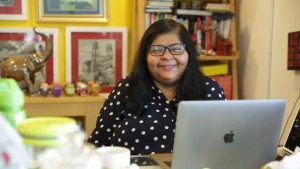
Jehan Ara is the President of the Pakistan Software Houses Association for IT & ITES (P@SHA). She is a motivator, an entrepreneur, a social activist and a strong advocate of extending the power and use of ICT to empower communities. She has 29 years experience in marketing, communications and interactive new media in Pakistan, Hong Kong, the UAE and the Far East. She is also advocating for online privacy and data protection legislation. Jehan Ara is also working on an initiative called the Women’s Virtual Network to connect educated women with potential employers, mentors and peers remotely to bring more Pakistani women into the economic fold and support the network for professional women.
7. Yasmeen Lari – Pakistan’s first female architect
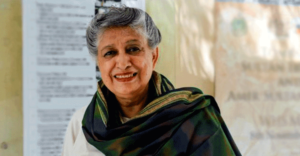
Pakistan’s first female architect, Yasmeen Lari, started her career in the early 1990s building some of the most iconic buildings of Karachi including the Taj Mahal Hotel, Finance and Trade Centre and the Pakistan State Oil House, making her mark in a male-dominated profession. But the 2005 earthquake changed the direction of Lari’s career and her life forever. The earthquake, which killed nearly 80,000 people and left 400,000 families displaced, compelled her to devote all energies to providing homes to the marginalised. She developed a low cost, carbon-free structure technique, using renewable materials, becoming one of the world’s most successful provider of sustainable and resilient disaster relief structures. Her foundation has built more than 50,000 houses for victims of floods and earthquakes in Pakistan since 2010. The 80-year-old architect was awarded the prestigious Jane Drew architecture prize in 2020.
8. Nigar Johar – Pakistan’s first woman three-star general

Lieutenant General Nigar Johar is the first woman three-star general in Pakistan’s history. She was promoted to the rank of lieutenant general in 2020. The officer has also been appointed as the first female surgeon general of the Pakistan Army. The officer, who hails from Swabi district of Khyber Pakhtunkhwa province, started her journey as a cadet in 1981. She described the journey through promotion and ranks in the army as long but rewarding experience. She also has the honour of being the first woman officer to be given command of an armed forces hospital. In the region and the Muslim world, “I am the first lieutenant general and I’m proud but immensely humbled. I feel there is a huge responsibility to lead my medical setup into excellence”, said Lt Gen Nigar.
9. Muniba Mazari – activist, artist, motivational speaker
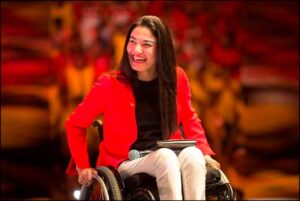
Muniba Mazari, Pakistan’s first UN Goodwill Ambassador to advance gender equality and the empowerment of women and girls, is a role model for many. Mazari is a writer, artist, singer, activist and a motivational speaker. At the age of 21, a car accident changed her life and left her half-paralysed. However, the immense pain that she endured because of the accident became her strength and allowed her to connect with others in pain. The experience turned her into an activist, encouraging women and girls who have experienced discrimination or violence and spread awareness about child violence and abuse, and support children’s education. The wheelchair-bound activist who is shattering the glass ceiling is called the iron woman of Pakistan.
10. Parveen Rahman – social activist and hero of the poor

Parveen Rahman, a social activist is an unsung hero who fought poverty and tirelessly worked to improve the lives of those living in poverty in Pakistan. In 1982, she joined the Orangi Pilot Project (OPP) and dedicated her life to the development of the impoverished neighbourhoods particularly for the residents of Karachi’s Orangi Town, one of the largest informal settlements in the world. “Parveen gave poor communities the confidence to realise that they knew what was best for them and that achieving their goals was possible through self-sufficiency and by lobbying the government to play its part,” her sister said. The courageous woman was killed near her office in 2013 as many believed her work to secure legal land rights for the poor enraged groups of land-grabbing criminals. Arif Pervez, a friend of hers, said she had been receiving death threats for a long time, apparently from the mafia involved in land grabbing.
11. Sharmeen Obaid-Chinoy
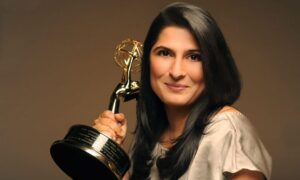
Two-time Oscar-winning filmmaker, Sharmeen Obaid-Chinoy has long been a supporter of women empowerment. Her powerful short films have done much to counter social and cultural taboos that mostly incriminate rural women across Pakistan.Born in Karachi, Sharmeen travelled to the USA where she studied journalism. It was here that a passion for documentaries and filmmaking began to develop. Chinoy became particularly interested in highlighting some of the deeper issues that lay in the fabric of Pakistani society, including refugees, acid attacks and honour killings. In 2012, she won an Academy Award for her documentary, Saving Face. The film followed a Pakistani plastic-surgeon as he performed reconstructive surgery on the survivors of acid attacks. She won yet another Academy Award, for her 2015 short film, A Girl in the River: The Price of Forgiveness. It recalls the real-life story of a 19-year-old girl, Saba, who escaped an honour killing by her father and uncle after she fell in love with a boy of her own choosing. Through her on-the-ground style of story-telling, Sharmeen has opened up debates about the status of women in Pakistan. Sadly, she has faced much censure for her efforts. Speaking to The Guardian, Sharmeen admitted: “I am a woman. I am successful. And I am not afraid to speak my mind. And that doesn’t sit well with a lot of men – and women. “It is very hard to be a woman in Pakistan and speak your mind. You know there will be an attempt to silence you. And the more people do that with me, the more I know I am being successful.”
12. Ayesha Farooq

Bahawalpur-born Ayesha Farooq is one of the first women to become a fighter pilot in the Pakistan Air Force. Farooq admits that she has always been the breadwinner of the family, particularly after her father, who was a doctor, passed away when she was only three years old. In a media interview, she says: “I was always the man of my family.” Speaking at the Aga Khan University (AKU) in Karachi, Ayesha adds that it was her mother’s influence that taught her the skills to take care of herself and help others: “My mother raised me to be strong, to a point that if one day, I was left alone, I would be able to take care of myself.” Her steely determination to do the right thing and support her mother and sisters seem to have naturally progressed into a career as a fighter pilot. While she understands the job is not seen as one open to women, she is happy to have been welcomed as an equal by her male colleagues: “It’s not a job that people here associate with ladies, so as well as doing a job for my country, I’m changing the thoughts of people. It’s a big responsibility but one I enjoy.” “I don’t feel any different. We do the same activities, the same precision bombing,” she tells Reuters. Interestingly, the Air Force is seeing a surge of female fighter pilots joining, showing how the once male-dominated army is now becoming more accessible to women. And Farooq has become a bold and strong role model for other young girls.
13. Maria Toorpakai

Maria is a true example of the lengths that some women have to take to realise dreams that are otherwise denied to them. Ranked as one of Pakistan’s top squash players, Maria’s route into sport came from disguising herself as a boy. As she mentions on her website: “I was born in Waziristan, Pakistan, a remote region commonly referred to as the “most dangerous place on earth. Girls rarely go to school and certainly don’t place sports. But, I grew up differently from other girls. At the age of four, I burnt all her [sic] dresses, cut my hair, put on my brother’s clothes and began to live life as a boy.” Maria’s father decided to enrol her in a weightlifting class in 2002, giving her the name of ‘Changez Khan’ (or Genghis Khan) as a disguise. Dressing as a boy, Maria was able to fit in with sport quite comfortably and was ranked in the number 2 spot in all of Pakistan for weightlifting in the junior division. It was at this point that Maria discovered squash after seeing it being played, and her father decided to enrol her in the local academy: “When the local squash academy in Peshawar required a birth certificate, my true identity was revealed. Fortunately, the director shared the same values as my father and handed me a racquet.” She turned professional in 2006. However, as news of her real gender became more and more known, she and her family began to face threats. Maria was forced to stay at home for several years and would practice squash against a wall in her house. Realising that it was no longer safe for her to stay there, Maria began sending emails and letters to schools and players around the world. In 2011, she was invited by former squash player Jonathan Power to train at his academy in Toronto, Canada. Maria Toorpakai has since returned to Pakistan after competing in a number of championships abroad. While she cannot play in Pakistan, she hopes to inspire other girls to realise their dreams.
14. Samina Baig

Samina is a high-altitude mountaineer who became the first Pakistani woman to climb all seven of the highest peaks around the world.She did so in the space of eight months, aged only 23. The seven summits include:
- Mount Everest in Asia
- Mount McKinley in Alaska
- Mount Elbrus in Russia
- Carstensz Pyramid in Indonesia
- Mount Kilimanjaro in Tanzania
- Mount Vinson in Antarctica
- Mount Aconcagua in Argentina
Hailing from one of the most northern areas of Pakistan, Samina’s interest in outdoor climbing and mountaineering had been instilled from an early age. She was aided by her brother Mirza Ali who is also a mountaineer. Having achieved such a great feat, a documentary was created on Samina’s powerful journey to Mount Everest called Beyond the Heights. It showed the sense of achievement that Samina felt as she trekked to the top, being the first Pakistani woman to do so. Early in 2018, Samina was also named Pakistan’s National Goodwill Ambassador by UNDP. On achieving this great honour, Samina said: “From the remotest village of Pakistan and reaching the summit of the world’s tallest mountain, Mt. Everest and beyond the borders, Scaling Peak in Antarctica and the seven highest peaks of the seven continents, in some of the most harsh conditions, my entire climbing purpose was to empower women through these adventures and encourage gender equality. “With my brother, I have experienced significant impact of global warming and climate change on our mother earth. “I find this honour as the national goodwill Ambassador of UNDP to spread the voice for climate change and environmental protection and advocate to empower young girls to climb the highest level within their field of profession.”
15. Maria Umar

With the rise of digital dependency around the world, Maria Umar is one of the many women in Pakistan who is overcoming gender stereotypes by empowering women to work online. ‘The Women’s Digital League’ is the brainchild of Umar and is an online platform that offers digital training and job opportunities for Pakistani women. In particular, it offers a way for women to work while still at home – something that remains an issue in parts of the country where families discourage women to leave the home in pursuit of work. The idea stemmed from Maria’s own experiences.
In an interview with Dawn, Maria explains:
“I started teaching at a school but they fired me after three years when I became pregnant. “I didn’t know what to do, so I started looking online because I knew my family was not going to allow me to pursue any other profession. I thought nobody would object to online work, but once I started giving shape to WDL, it just grew and my family saw the commitment I had to my work.”
Umar’s initiative brings work to the women, who can join the digital outsourcing company and work as freelancers. In another interview with Mashable, Maria says: “Girls themselves are becoming more empowered and asking for their right to education. “Unfortunately not very many actually utilise that education in the formal sector… Families discourage girls from working outside due to the security situation and lack of social acceptance.” She is applauded for being one of the key leaders in promoting entrepreneurship in Pakistan, by giving women the freedom to work on their own terms.