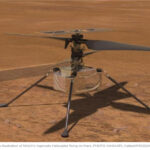
The Ingenuity #MarsHelicopter is set to make history. It will make the first attempt at powered flight on another planet on Monday, April 19. Don’t miss your chance to watch live with helicopter team in mission control beginning at 6:15 a.m. EDT (10:15 a.m. UTC) as they receive the data and find out if they were successful.
🚁 On Mon., April 19, our Ingenuity #MarsHelicopter makes its first attempt at flight. Watch live coverage from @NASAJPL beginning at 6:15am ET (10:15am UTC) as the team receives the first data & finds out if they’ve made history: https://t.co/JFEsGuAYbr pic.twitter.com/w6RjKWVHV7
— NASA (@NASA) April 19, 2021
Event Historical Video 19th April 2021
The First Flight Test on Mars
Once the team is ready to attempt the first flight, Perseverance will receive and relay to Ingenuity the final flight instructions from JPL mission controllers. Several factors will determine the precise time for the flight, including modeling of local wind patterns plus measurements taken by the Mars Environmental Dynamics Analyzer (MEDA) aboard Perseverance. Ingenuity will run its rotors to 2,537 rpm and, if all final self-checks look good, lift off. After climbing at a rate of about 3 feet per second (1 meter per second), the helicopter will hover at 10 feet (3 meters) above the surface for up to 30 seconds. Then, the Mars Helicopter will descend and touch back down on the Martian surface.
Several hours after the first flight has occurred, Perseverance will downlink Ingenuity’s first set of engineering data and, possibly, images and video from the rover’s Navigation Cameras and Mastcam-Z. From the data downlinked that first evening after the flight, the Mars Helicopter team expect to be able to determine if their first attempt to fly at Mars was a success.
On the following sol, all the remaining engineering data collected during the flight, as well as some low-resolution black-and-white imagery from the helicopter’s own Navigation Camera, could be downlinked to JPL. The third sol of this phase, the two images taken by the helicopter’s high-resolution color camera should arrive. The Mars Helicopter team will use all information available to determine when and how to move forward with their next test.
“Mars is hard,” said Aung. “Our plan is to work whatever the Red Planet throws at us the very same way we handled every challenge we’ve faced over the past six years – together, with tenacity and a lot of hard work, and a little Ingenuity.”
Source NASA